13
Aug

Enable 2-Step Verification GWS-Gmail Users (MFA)

Here’s how you can do it, following Google’s recommended steps:

  1. Sign in to your Google Account: Go to myaccount.google.com and sign in with your company email credentials.
  2. Go to Security: In the left navigation panel, click on “Security.”
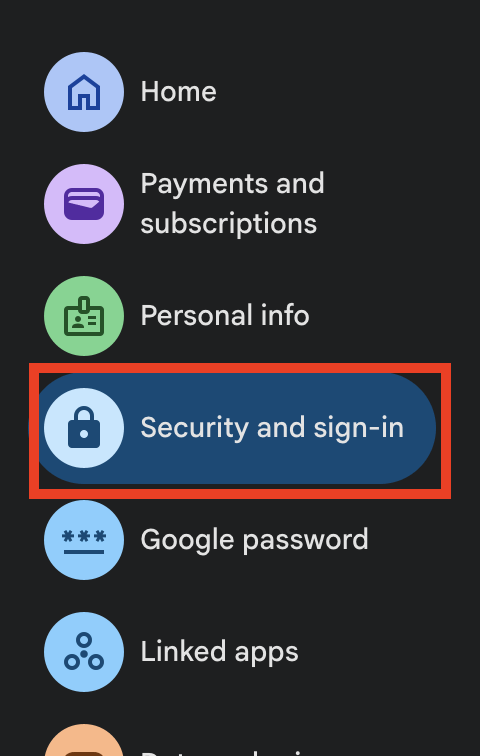


  3. Click on “2-Step Verification.” You may need to sign in again for security purposes.
  4. Turn on 2-Step Verification: Click “Turn on.”
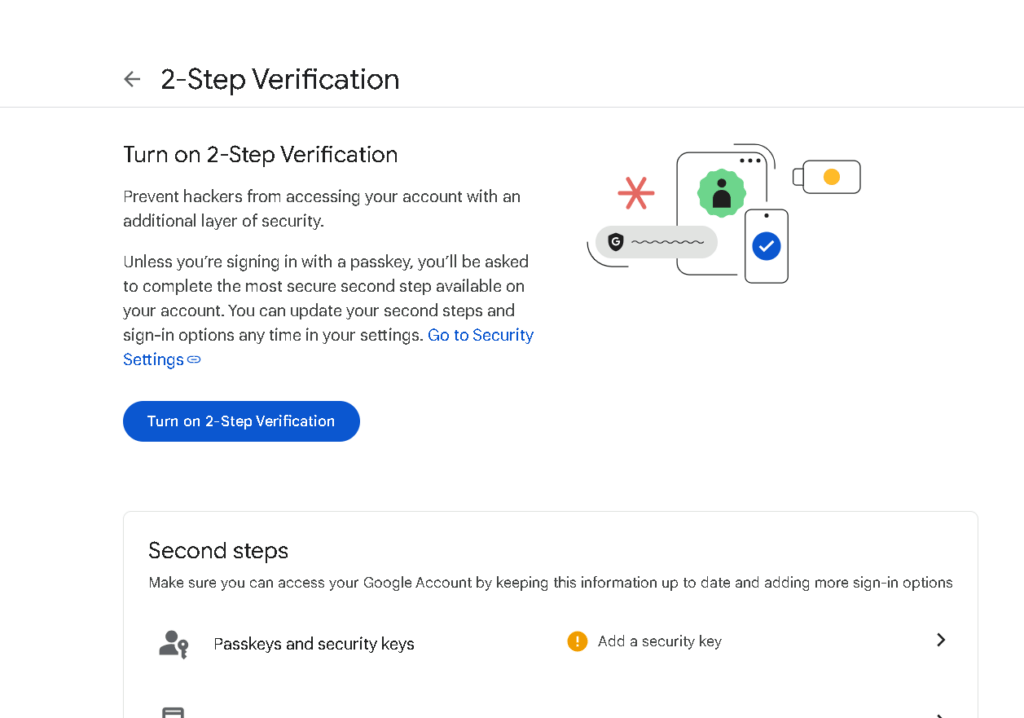
  1. Choose a second step: Google offers several options for 2FA. We recommend using
    • Google Prompt (Recommended): This sends a prompt to your phone asking you to tap “Yes” to confirm your login. It’s the easiest and most secure option. If you have a compatible Android or iOS device, this will be the most seamless option.
    • Phone number (SMS or voice call): Google can send a verification code to your phone via SMS message or a voice call. This is a good option if you don’t have a smartphone or prefer not to use an app.
    • Authenticator app: An authenticator app (like Google Authenticator or Authy) generates unique codes on your phone that you enter during login.
  2. Follow the on-screen instructions: Google will guide you through setting up your chosen second step. This might involve installing an app, scanning a QR code, or entering your phone number.
  3. For Phone number (SMS or voice call):
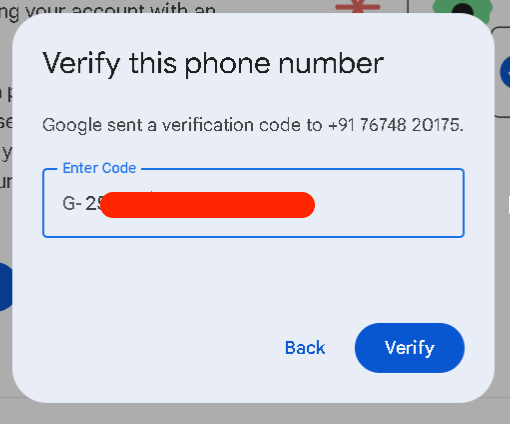
    • Insert your mobile phone number

    • Insert OTP received on your phone and verify
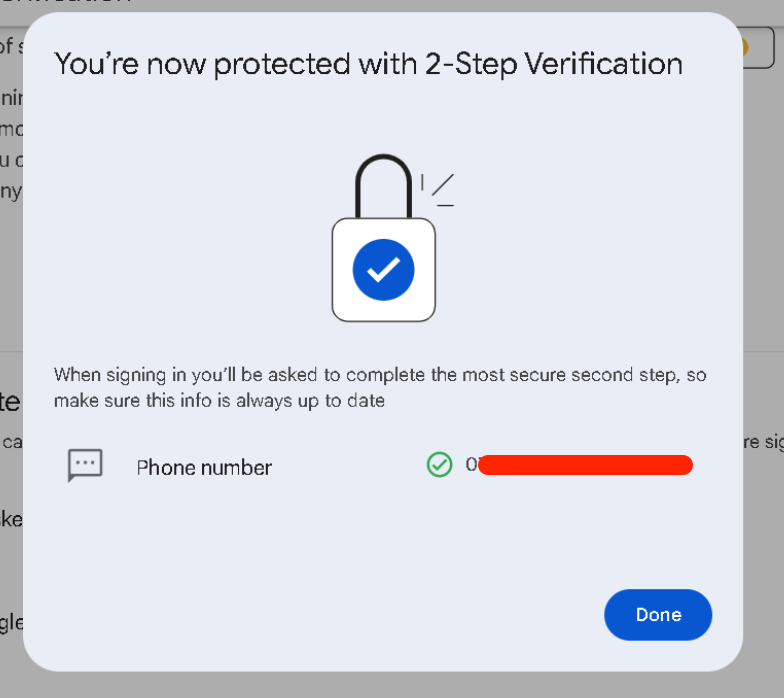
  • Insert OTP received on your phone and verify

8. Again Go to Security: In the left navigation panel, click on “Security.”


a) click on “2-Step Verification.”
b) Turn on 2-Step Verification: Click “Turn on.”

Set Up the Authenticator App

  1. On the 2-Step Verification page, look for the “Authenticator app” section. If you haven’t set it up before, it will likely say “Set up Authenticator”. Click on it.

  2. A pop-up window will appear asking you to choose the type of phone you have (Android or iPhone). Select your phone type and click Next.

Step 3: Link Your Google Account with the Authenticator App

You will now be presented with two ways to link your account:

  • Using a QR Code (Recommended):
    1. Open the Google Authenticator app on your smartphone.
    2. Tap the “+” (plus) icon, usually located at the bottom right of the app.
    3. Select “Scan a QR code”. The app will ask for permission to access your camera. Grant the permission.
    4. Point your phone’s camera at the QR code displayed on your computer screen (in the browser window from Step 2). Make sure the QR code is within the frame on your phone’s screen.
    5. Once the app successfully scans the QR code, your Google Account will be added to the Authenticator app, and it will start displaying a time-based six-digit verification code.
20
Apr

How to Find Emails Using Message ID in Gmail/Google Workspace

Occasionally, users express concern that they are not receiving emails from a particular sender or group, whereas their peers consistently receive those messages.

To thoroughly investigate, obtaining the message ID of the specific email is essential for locating it within the inbox. Consequently, the following criteria must be satisfied to effectively search for an email using its message ID. You will need to acquire the message ID from your colleague.

  1. The affected user should be in the cc/bcc/to of the same email sender from his/her colleague who received the email
  2. Email should be delivered via a group (Google Group/O365 group/distribution list, etc)
  3. You can also get the message ID of the email from your administrator from an email log search.

How to Get Message Id from Gmail / Google workspace mailbox

  1. Open the browser, open Gmail.
  2. Open the email you want to find the message id.
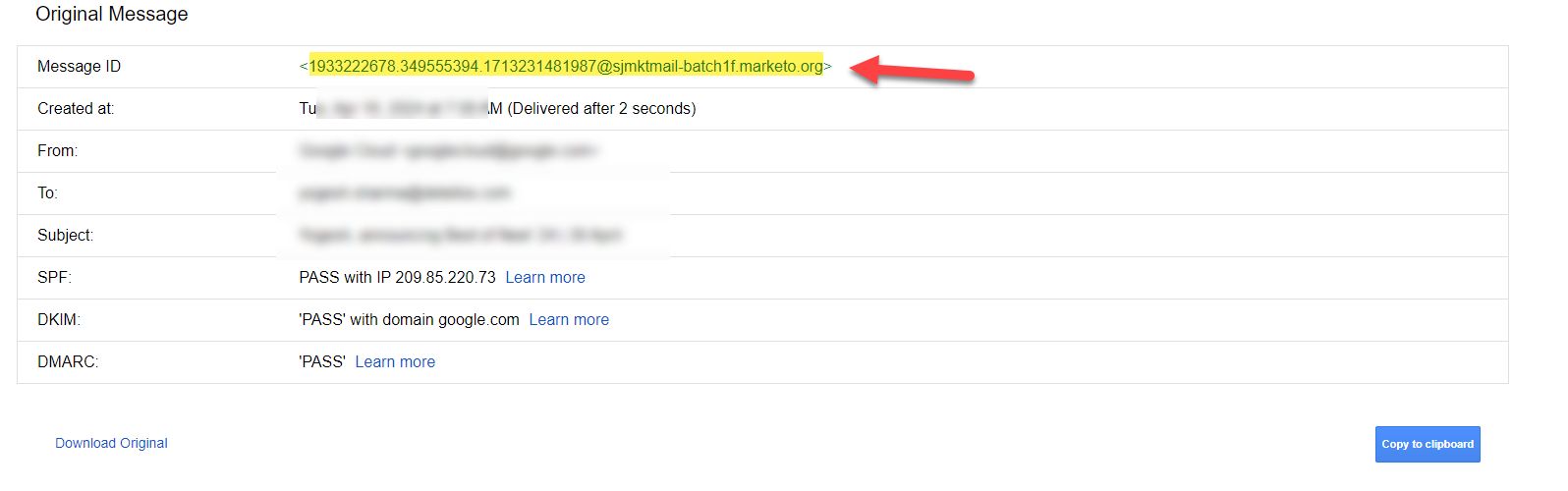
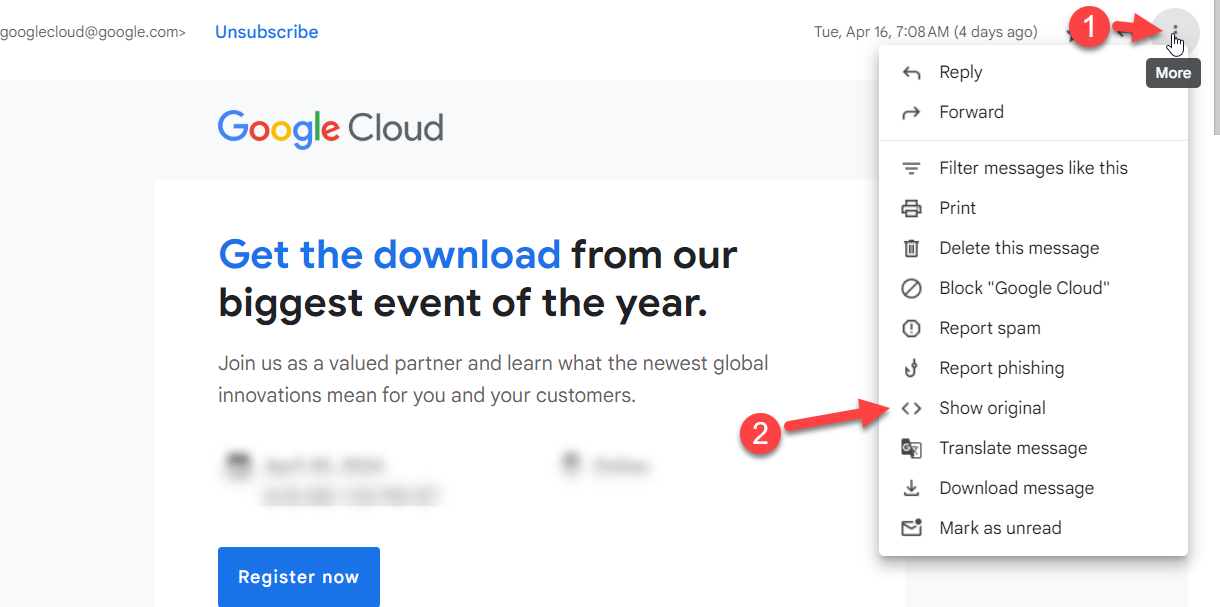
  3. Next to Reply, click More. Show original.
    • Search message id
  4. In a new window, the full header shows.
  5. Copy the message ID, do not copy the brackets.


    If you want to download the full message header, then
    • Click Copy to clipboard and save to Notepad.
    • Or click the Download header        

Search email in Mailbox using message id

  1. Open a Browser, and go to Gmail.
  2. Click on the “search in the mail” in the search bar.
  3. Past the below string, with message-id copied from the above steps
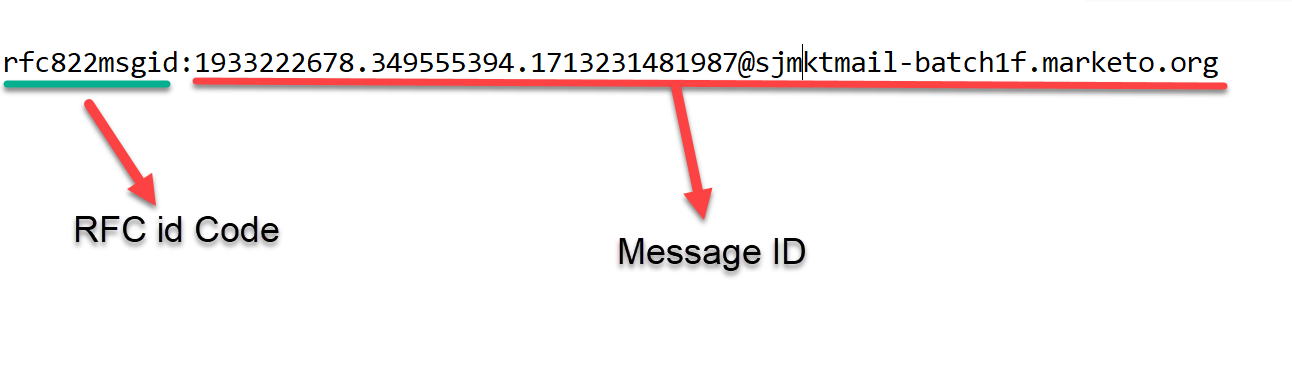
    1. rfc822msgid:msgeid

For eg

rfc822msgid:1933222678.349555394.1713231481987@sjmktmail-batch1f.marketo.org

4. Press Enter

15
May

“WannaCrypt” Ransmware Attack

“WannaCrypt” Ransomeware, What it is and how it does work?

After a big cyber attack by the hacker on Friday 12 May, 2017 in the form of “WannaCrypt” Ransomeware”. The attacker might have come back soon after making some changes in the code. According to Microsoft, they released a patch on 15 March 2017 to protect their customer from this “WannaCrypt” Ransmware” after United States reported earlier about the stolen of the code from the National Security Agency, or NSA. So basically, it is not a virus it’s a data encrypting/decrypting software.

First, this attack covers the United Kingdom and Spain, then malicious “WannaCrypt” software attack globally, blocking users to access their data and demand to pay a ransom using Bitcoin. Attackers demanding $300 dollar to decrypt your data but interestingly there is not guaranty that they will be able to decrypt your data. This kind of code which is currently used by many companies in many forms to protect their data while sending from one place to another over the internet. Let see How this work.

Let say you have some important data that you want to send to you colleague, the with help of encryption software you can encrypt your data and send via mail, if anybody get you data by phishing hacking then they won’t be able to read file because of the encryption but you colleague can because he has the decryption on their system. There number of software available (you can google it) to encrypt your data.

According to the experts, nobody should pay to them for decrypting the data as result it encourages them to do it again but a slight change in code and as you contacted them earlier, hence you would be the soft target for them to hit you again. There are also strong chances that the attackers do have code to decrypt data as the stole code from the NSA United States and paying will give you nothing.

There are high chances that you receive “WannaCrypt” Ransomware (code) via mail and after downloading it will ask you to give access to your file and when you grant the access, it will encrypt you hard drive data in seconds. So, you need to keep below points in mind to avoid this attack.

  1. Try to use less internet for some days, use it when you really need it.
  2. Do to click any link in the mail which is not familiar to you, call/chat your buddy and ask if he/she really send that mail or not.
  3. Do download free software’s and cracks, especially cracks which you should never user as they are completely virus.
  4. Turn on your windows update or install the update manually from Microsoft website here.
  5. Do not accept any authentication for any file you downloaded from the internet and from email. Keep check the URL while downloading any document, the URL should be trusted, provider.
  6. Install good antivirus, it always helps you to protect unwanted virus and online attacks.

Google and Microsoft world top leading companies of email provider are trying to keep their customer safe, to get these mail delivered.The “WannaCrypt” Ransomware mostly reach to the user via mail but users should keep this in mind that most important percussion is to patch your window and do not download anything from the internet/mail to your system.